HOME
Shop
  • English
  • 简体中文
HOME
Shop
  • English
  • 简体中文
  • Product Series

    • FPGA+ARM

      • GM-3568JHF

        • 1. Introduction

          • GM-3568JHF Introduction
        • 2. Quick Start

          • 01 Environment Construction
          • 02 Compilation Instructions
          • 03 Burning Guide
          • 04 Debugging Tools
          • 05 Software Update
          • 06 View information
          • 07 Test Command
          • 08 Application Compilation
          • 09 Source code acquisition
        • 3. Peripherals and Interfaces

          • USB
          • Display and touch
          • Ethernet
          • WIFI
          • Bluetooth
          • TF-Card
          • Audio
          • Serial Port
          • CAN
          • RTC
        • 4. Application Development

          • 01 UART read and write case
          • 02 Key detection case
          • 03 LED light flashing case
          • 04 MIPI screen detection case
          • 05 Read USB device information example
          • 06 FAN Detection Case
          • 07 FPGA FSPI Communication Case
          • 08 FPGA DMA read and write case
          • 09 GPS debugging case
          • 10 Ethernet Test Cases
          • 11 RS485 reading and writing examples
          • 12 FPGA IIC read and write examples
          • 13 PN532 NFC card reader case
          • 14 TF card reading and writing case
        • 5. QT Development

          • 01 ARM64 cross compiler environment construction
          • 02 QT program added automatic startup service
        • 6. Others

          • 01 Modification of the root directory file system
          • 02 System auto-start service
    • ShimetaPi

      • M4-R1

        • Introduction

          • M4-R1 Introduction
        • Get started quickly

          • OpenHarmony概述
          • 镜像烧录
          • 开发环境准备
          • Hello World应用以及部署
        • Application Development

          • getting Started

            • 第一章 ArkTS语言简介
            • 第二章 UI组件介绍和实际应用(上)
            • 第三章 UI组件介绍和实际应用(中)
            • 第四章 UI组件介绍和实际应用(下)
          • Advanced

            • 第一章 入门指引
            • 第二章 三方库的引用和使用
            • 第三章 应用编译以及部署
            • 第四章 命令行恢复出厂设置
            • 第五章 系统调试--HDC调试
            • 第六章 APP 稳定性测试
            • 第七章 应用测试
        • Equipment Development

          • 第一章 环境搭建
          • 第二章 下载源码
          • 第三章 编译源码
        • Peripherals and interfaces

          • 树莓派接口
          • GPIO 接口
          • I2C 接口
          • SPI通信
          • PWM控制
          • 串口通讯
          • TF Card
          • 屏幕
          • 触摸
          • 音频
          • RTC
          • Ethernet
          • M.2
          • MINI-PCIE
          • Camera
          • WIFI&BT
          • 树莓派拓展板
        • Frequently asked questions

          • 资源下载
      • M5-R1

        • Introduction

          • Introduction to ShimetaPi M5-R1
    • OpenHarmony

      • SC-3568HA

        • Introduction

          • SC-3568HA Overview
        • Quick Start Guide

          • OpenHarmony Overview
          • Image Flashing
          • Setting Up the Development Environment
          • Hello World Application and Deployment
        • Application Development

          • ArkUI

            • Chapter 1 Introduction to ArkTS Language
            • Chapter 2 Introduction to UI Components and Practical Applications (Part 1)
            • Chapter 3 Introduction to UI Components and Practical Applications (Part 2)
            • Chapter 4 Introduction to UI Components and Practical Applications (Part 3)
          • Expand

            • Chapter 1 Getting Started Guide
            • Chapter 2 Referencing and Using Third-Party Libraries
            • Chapter 3: Application Compilation and Deployment
            • Chapter 4: Command-Line Factory Reset
            • Chapter 5: System Debugging -- HDC (Huawei Device Connector) Debugging
            • Chapter 6 APP Stability Testing
            • Chapter 7 Application Testing
        • Device Development

          • Chapter 1 Environment Setup
          • Chapter 2 Download Source Code
          • Chapter 3 Compiling Source Code
        • Peripheral And Iinterface

          • Raspberry Pi interface
          • GPIO Interface
          • I2C Interface
          • SPI communication
          • PWM (Pulse Width Modulation) control
          • Serial port communication
          • TF Card
          • Display Screen
          • Touch
          • Audio
          • RTC
          • Ethernet
          • M.2
          • MINI-PCIE
          • Camera
          • WIFI&BT
          • Raspberry Pi expansion board
        • Frequently Asked Questions

          • Resource Downloads
      • M-K1HSE

        • Introduction

          • M-K1HSE Introduction
        • Quick Start

          • Development environment construction
          • Source code acquisition
          • Compilation Notes
          • Burning Guide
        • Peripherals and interfaces

          • 01 Audio
          • 02 RS485
          • 03 Display
        • System customization development

          • System transplant
          • System customization
          • Driver Development
          • System Debugging
          • OTA Update
    • EVS-Camera

      • CF-NRS1

        • 1. Introduction

          • Event Camera Technical Documentation
        • 2. Quick Start

          • Host driver and software installation
        • 3. SDK application development

          • API Usage Instructions
      • CF-CRA2

        • Introduction

          • About CF-NRS1
    • AI-model

      • 1684XB-32T

        • Introduction

          • AIBOX-1684XB-32 Introduction
        • Get started quickly

          • First time use
          • Network Configuration
          • Disk usage
          • Memory allocation
          • Fan Strategy
          • Firmware Upgrade
        • Deployment Tutorial

          • Algorithm deployment
          • Deploy Llama3 Example
        • Application Development

          • Sophgo SDK Development
          • Sophon LLM_api_server development
          • Deploy MiniCPM-V-2_6
          • Qwen-2-5-VL Image and Video Recognition DEMO
          • Qwen3-chat-DEMO
          • Qwen3-Qwen Agent-MCP-Demo
          • Qwen3-langchain-AI Agent
      • 1684X-416T

        • Introduction

          • AIBOX-1684X-416 Introduction
        • Demo simple operation guide

          • Simple instructions for using shimeta smart monitoring demo
    • Core-Board

      • C-3568BQ

        • Introduction

          • C-3568BQ Overview
      • C-3588LQ

        • Introduction

          • C-3588LQ Introduction
      • GC-3568JBAF

        • Introduction

          • GC-3568JBAF Introduction
      • C-K1BA

        • Introduction

          • C-K1BA Introduction

第五章 系统调试--HDC调试

1. 前言

hdc(OpenHarmony Device Connector)是为开发人员提供的用于设备连接调试的命令行工具,该工具需支持部署在Windows/Linux/Mac等系统上与OpenHarmony设备(或模拟器)进行连接调试通信。

简言之,hdc是OpenHarmony提供的用于开发人员调试硬件、应用的命令行工具,用在电脑与开发板之间的交互。适用于OpenHarmony应用、硬件开发及测试人员,是每个开发人员的必备、入门工具。

2. 环境准备

支持运行环境

本文以window11电脑和Rk开发板为例进行说明

2.1 安装USB驱动

DriverAssitant 是RK 开发板自带的 USB驱动。双击 DriverInstall.exe,选择驱动安装。

1)百度网盘资料中下载瑞芯微的USB驱动压缩包(DriverAssitant_v5.1.1)

https://pan.baidu.com/s/1ZUn2BNg-Sb6M-fWhDqAFMw?pwd=smcc 提取码:smcc

2)解压压缩包后文件夹中点击驱动安装(DriverInstall.exe)

Tips

驱动压缩包路径:ShiMetaPi配套网盘资料>02-软件工具> Rockchip>RKTools>windows>DriverAssitant_v5.1.1.zip

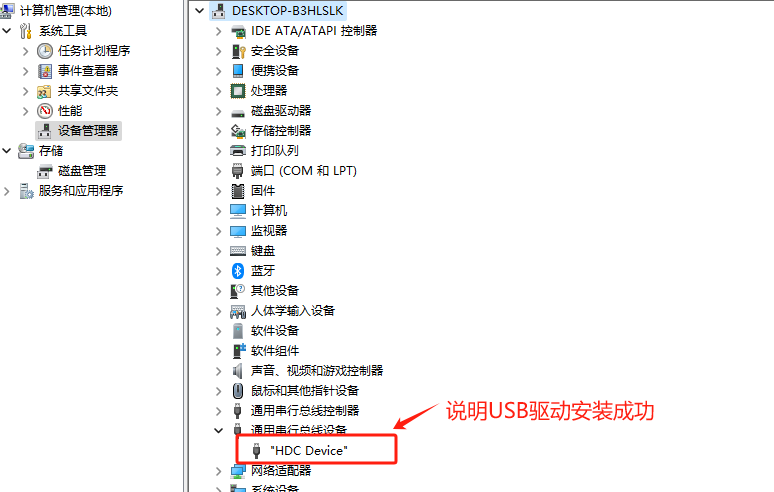
3)设备管理器查看驱动是否安装成功:
TOOL

2.2 hdc工具下载

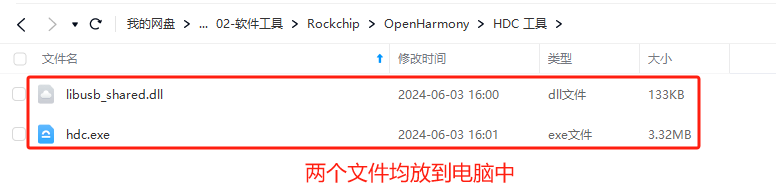
1)百度网盘资料中下载HDC工具 链接:https://pan.baidu.com/s/1nD6d__hYqQhQKyXvVfKoJg 提取码:smcc
TOOL

Tips

工具路径:ShiMetaPi配套网盘资料>02-软件工具>OpenHarmony>HDC 工具

2)hdc路径环境配置:

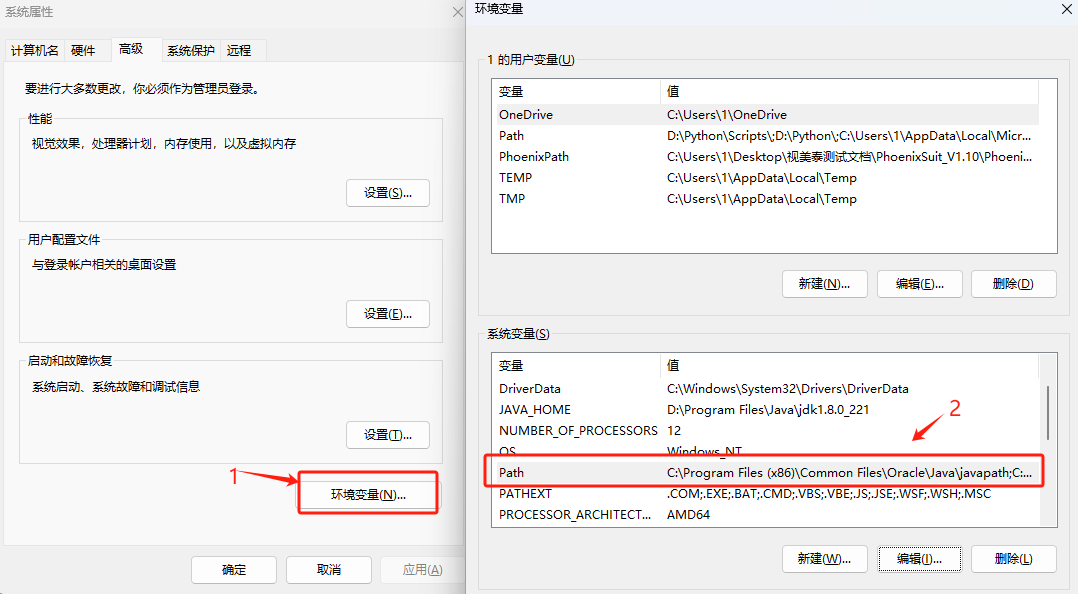
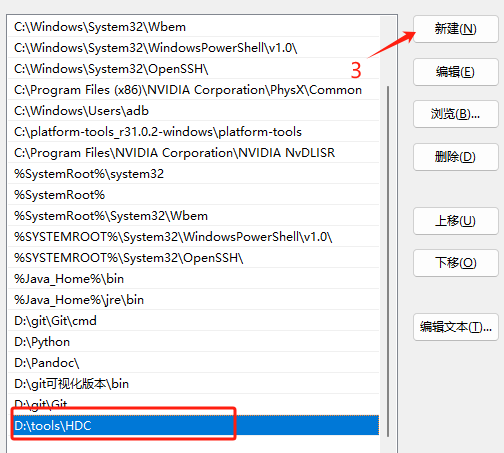
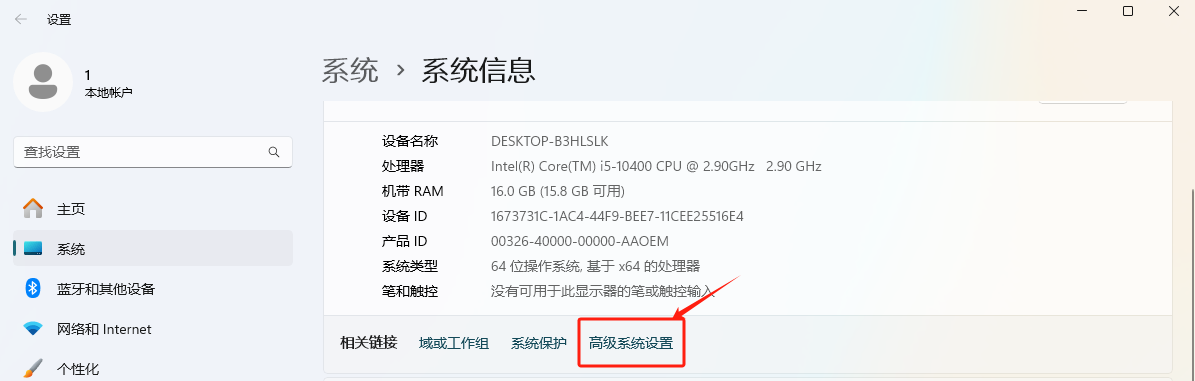
hdc path环境配置如图所示:我的电脑,右键选择属性,选择“高级系统设置”→环境设置→系统环境变量中的 path双击→新建输入“D:\tools\HDC”→一路“确定”
TOOLTOOLTOOL

注意:

环境变量中的路径选择自己电脑中hdc存在的路径,不要带中文字符

3. 连接设备

1)M4-R1的USB-OTG默认已经是device模式。

2)电脑用USB线连接设备OTG口。

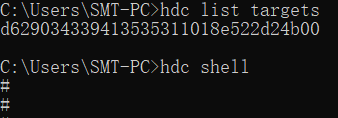
3)电脑上打开命令行工具,输入hdc list targets,连接成功可打印出设备,如下:

    hdc list targets
    150100414a54443452069035fa308800

4)输入'hdc shell'可以进入终端
TOOL

4. 常用命令

以下着重介绍些常用的HDC 指令,其他的可以自行通过搜索引擎查找

1)设备查询

	hdc list targets

2)remount

	hdc shell mount -o remount,rw /

3)启动APP

	hdc shell aa start -a MainAbility -b com.example.sampledemo

4)重启

	hdc shell reboot

5)安装APP

	hdc install -r 路径.hap

6)复制电脑文件到设备

	hdc file send "D:\D-backup\temp_work\xxx.hap" data/xxx.hap

7)复制设备文件到电脑(抓log)

	hdc file recv /data/log ./openharmony_log

8)查询应用信息

	bm dump -n com.example.mydemo |grep system

5. bn 工具

Bundle Manager(包管理工具,简称bm)是实现应用安装、卸载、更新、查询等功能的工具,bm为开发者提供基本的应用安装包的调试能力,例如:安装应用,卸载应用,查询安装包信息等。

详见

https://docs.openharmony.cn/pages/v5.0/zh-cn/application-dev/tools/bm-tool.md/

6. aa工具

Ability assistant(Ability助手,简称为aa),是实现应用及测试用例启动功能的工具,为开发者提供基本的应用调试和测试能力,例如启动应用组件、强制停止进程、打印应用组件相关信息等。

详见

https://docs.openharmony.cn/pages/v5.0/zh-cn/application-dev/tools/aa-tool.md/


Edit this page on GitHub
Last Updated:
Contributors: zwhuang
Prev
第四章 命令行恢复出厂设置
Next
第六章 APP 稳定性测试