HOME
Shop
  • English
  • 简体中文
HOME
Shop
  • English
  • 简体中文
  • Product Series

    • FPGA+ARM

      • GM-3568JHF

        • 1. Introduction

          • About GM-3568JHF
        • 2. Quick Start

          • 00 Introduction
          • 01 Environment Setup
          • 02 Compilation Instructions
          • 03 Flashing Guide
          • 04 Debug Tools
          • 05 Software Update
          • 06 View Information
          • 07 Test Commands
          • 08 App Compilation
          • 09 Source Code Acquisition
        • 3. Peripherals and Interfaces

          • 01 USB
          • 02 Display and Touch
          • 03 Ethernet
          • 04 WIFI
          • 05 Bluetooth
          • 06 TF-Card
          • 07 Audio
          • 08 Serial Port
          • 09 CAN
          • 10 RTC
        • 4. Application Development

          • 01 UART read and write case
          • 02 Key detection case
          • 03 LED light flashing case
          • 04 MIPI screen detection case
          • 05 Read USB device information example
          • 06 FAN Detection Case
          • 07 FPGA FSPI Communication Case
          • 08 FPGA DMA read and write case
          • 09 GPS debugging case
          • 10 Ethernet Test Cases
          • 11 RS485 reading and writing examples
          • 12 FPGA IIC read and write examples
          • 13 PN532 NFC card reader case
          • 14 TF card reading and writing case
        • 5. QT Development

          • 01 ARM64 cross compiler environment construction
          • 02 QT program added automatic startup service
        • 6. RKNN_NPU Development

          • 01 RK3568 NPU Overview
          • 02 Development Environment Setup
          • Run Official YOLOv5 Example
          • Model Conversion Detailed Explanation
          • Run Custom Model on Board
        • 7. FPGA Development

          • ARM and FPGA Communication
          • /fpga-arm/GM-3568JHF/FPGA/ch02-FPGA-Development-Manual.html
        • 8. Others

          • 01 Modification of the root directory file system
          • 02 System auto-start service
        • 9. Download

          • Download Resources
    • ShimetaPi

      • M4-R1

        • 1. Introduction

          • 1.1 About M4-R1
        • 2. Quick Start

          • 2.1 OpenHarmony Overview
          • 2.2 Image Burning
          • 2.3 Development Environment Preparation
          • 2.4 Hello World Application
        • 3. Application Development

          • 3.1 Getting Started

            • 3.1.1 ArkTS Language Overview
            • 3.1.2 UI Components (Part 1)
            • 3.1.3 UI Components (Part 2)
            • 3.1.4 UI Components (Part 3)
          • 3.2 Advanced

            • 3.2.1 Getting Started Guide
            • 3.2.2 Usage of Third Party Libraries
            • 3.2.3 Deployment of the Application
            • 3.2.4 Factory Reset
            • 3.2.5 System Debug
            • 3.2.6 APP Stability Testing
            • 3.2.7 Application Testing
          • 3.3 Getting Docs

            • 3.3.1 Official Website Information
          • 3.4 Development Instructions

            • 3.4.1 Full SDK
            • 3.4.2 Introduction of Third Party Libraries
            • 3.4.3 Introduction of HDC Tool
            • 3.4.4 Restore Factory Mode
            • 3.4.5 Update System API
          • 3.5 First Application

            • 3.5.1 First ArkTS App
          • 3.6 Application Demo

            • 3.6.1 UART Tool
            • 3.6.2 Graphics Tablet
            • 3.6.3 Digital Clock
            • 3.6.4 WIFI Tool
        • 4. Device Development

          • 4.1 Ubuntu Environment Development

            • 4.1.1 Environment Setup
            • 4.1.2 Download Source Code
            • 4.1.3 Compile Source Code
          • 4.2 Using DevEco Device Tool

            • 4.2.1 Tool Introduction
            • 4.2.2 Environment Construction
            • 4.2.3 Import SDK
            • 4.2.4 Function Introduction
        • 5. Peripherals and Interfaces

          • 5.1 Raspberry Pi Interfaces
          • 5.2 GPIO Interface
          • 5.3 I2C Interface
          • 5.4 SPI Communication
          • 5.5 PWM Control
          • 5.6 Serial Port Communication
          • 5.7 TF Card Slot
          • 5.8 Display Screen
          • 5.9 Touch Screen
          • 5.10 Audio
          • 5.11 RTC
          • 5.12 Ethernet
          • 5.13 M.2
          • 5.14 MINI PCIE
          • 5.15 Camera
          • 5.16 WIFI BT
          • 5.17 HAT
        • 6. FAQ

          • 6.1 Download Link
      • M5-R1

        • 1. Introduction

          • M5-R1 Development Documentation
        • 2. Quick Start

          • OpenHarmony Overview
          • Image Burning
          • Development Environment Preparation
          • Hello World Application and Deployment
        • 3. Peripherals and Interfaces

          • 3.1 Raspberry Pi Interfaces
          • 3.2 GPIO Interface
          • 3.3 I2C Interface
          • 3.4 SPI Communication
          • 3.5 PWM Control
          • 3.6 Serial Port Communication
          • 3.7 TF Card Slot
          • 3.8 Display Screen
          • 3.9 Touch Screen
          • 3.10 Audio
          • 3.11 RTC
          • 3.12 Ethernet
          • 3.13 M.2
          • 3.14 MINI PCIE
          • 3.15 Camera
          • 3.16 WIFI BT
          • 3.17 HAT
        • 4. Application Development

          • 4.1 Getting Started

            • 4.1.1 ArkTS Language Overview
            • 4.1.2 UI Components (Part 1)
            • 4.1.3 UI Components (Part 2)
            • 4.1.4 UI Components (Part 3)
          • 4.2 Advanced

            • 4.2.1 Getting Started Guide
            • 4.2.2 Usage of Third Party Libraries
            • 4.2.3 Deployment of the Application
            • 4.2.4 Factory Reset
            • 4.2.5 System Debug
            • 4.2.6 APP Stability Testing
            • 4.2.7 Application Testing
        • 5. Device Development

          • 5.1 Environment Setup
          • 5.2 Download Source Code
          • 5.3 Compile Source Code
        • 6. Download

          • Data Download
    • OpenHarmony

      • SC-3568HA

        • 1. Introduction

          • 1.1 About SC-3568HA
        • 2. Quick Start

          • 2.1 OpenHarmony Overview
          • 2.2 Image Burning
          • 2.3 Development Environment Preparation
          • 2.4 Hello World Application
        • 3. Application Development

          • 3.1 ArkUI

            • 3.1.1 ArkTS Language Overview
            • 3.1.2 UI Components (Part 1)
            • 3.1.3 UI Components (Part 2)
            • 3.1.4 UI Components (Part 3)
          • 3.2 Advanced

            • 3.2.1 Getting Started Guide
            • 3.2.2 Usage of Third Party Libraries
            • 3.2.3 Deployment of the Application
            • 3.2.4 Factory Reset
            • 3.2.5 System Debug
            • 3.2.6 APP Stability Testing
            • 3.2.7 Application Testing
        • 4. Device Development

          • 4.1 Environment Setup
          • 4.2 Download Source Code
          • 4.3 Compile Source Code
        • 5. Peripherals and Interfaces

          • 5.1 Raspberry Pi Interfaces
          • 5.2 GPIO Interface
          • 5.3 I2C Interface
          • 5.4 SPI Communication
          • 5.5 PWM Control
          • 5.6 Serial Port Communication
          • 5.7 TF Card Slot
          • 5.8 Display Screen
          • 5.9 Touch Screen
          • 5.10 Audio
          • 5.11 RTC
          • 5.12 Ethernet
          • 5.13 M.2
          • 5.14 MINI PCIE
          • 5.15 Camera
          • 5.16 WIFI BT
          • 5.17 HAT
        • 6. FAQ

          • 6.1 Download Link
      • M-K1HSE

        • 1. Introduction

          • 1.1 Product Introduction
        • 2. Quick Start

          • 2.1 Debug Tool Installation
          • 2.2 Development Environment Setup
          • 2.3 Source Code Download
          • 2.4 Build Instructions
          • 2.5 Flashing Guide
          • 2.6 APT Update Sources
          • 2.7 View Board Info
          • 2.8 CLI LED and Key Test
          • 2.9 GCC Build Programs
        • 3. Application Development

          • 3.1 Basic Application Development

            • 3.1.1 Development Environment Preparation
            • 3.1.2 First Application HelloWorld
            • 3.1.3 Develop HAR Package
          • 3.2 Peripheral Application Cases

            • 3.2.1 UART Read/Write
            • 3.2.2 Key Demo
            • 3.2.3 LED Flash
        • 4. Peripherals and Interfaces

          • 4.1 Standard Peripherals

            • 4.1.1 USB
            • 4.1.2 Display and Touch
            • 4.1.3 Ethernet
            • 4.1.4 WIFI
            • 4.1.5 Bluetooth
            • 4.1.6 TF Card
            • 4.1.7 Audio
            • 4.1.8 Serial Port
            • 4.1.9 CAN
            • 4.1.10 RTC
          • 4.2 Interfaces

            • 4.2.1 Audio
            • 4.2.2 RS485
            • 4.2.3 Display
            • 4.2.4 Touch
        • 5. System Customization Development

          • 5.1 System Porting
          • 5.2 System Customization
          • 5.3 Driver Development
          • 5.4 System Debugging
          • 5.5 OTA Upgrade
        • 6. Download

          • 6.1 Download
    • EVS-Camera

      • CF-NRS1

        • 1. Introduction

          • 1.1 About CF-NRS1
          • 1.2 Event-Based Concepts
          • 1.3 Quick Start
          • 1.4 Resources
        • 2. Development

          • 2.1 Development Overview

            • 2.1.1 Shimetapi Hybrid Camera SDK Introduction
          • 2.2 Environment & API

            • 2.2.1 Environment Overview
            • 2.2.2 Development API Overview
          • 2.3 Linux Development

            • 2.3.1 Linux SDK Introduction
            • 2.3.2 Linux SDK API
            • 2.3.3 Linux Algorithm
            • 2.3.4 Linux Algorithm API
          • 2.4 Service & Web

            • 2.4.1 EVS Server
            • 2.4.2 Time Server
            • 2.4.3 EVS Web
        • 3. Download

          • 3.1 Download
        • 4. Common Problems

          • 4.1 Common Problems
      • CF-CRA2

        • 1. Introduction

          • 1.1 About CF-CRA2
        • 2. Download

          • 2.1 Download
      • EVS Module

        • 1. Related Concepts
        • 2. Hardware Preparation and Environment Configuration
        • 3. Example Program User Guide
        • Resources Download
    • AI-model

      • 1684XB-32T

        • 1. Introduction

          • AIBOX-1684XB-32 Introduction
        • 2. Quick Start

          • First time use
          • Network Configuration
          • Disk usage
          • Memory allocation
          • Fan Strategy
          • Firmware Upgrade
          • Cross-Compilation
          • Model Quantization
        • 3. Application Development

          • 3.1 Development Introduction

            • Sophgo SDK Development
            • SOPHON-DEMO Introduction
          • 3.2 Large Language Models

            • Deploying Llama3 Example
            • /ai-model/AIBOX-1684XB-32/application-development/LLM/Sophon_LLM_api_server-Development-AIBOX-1684XB-32.html
            • /ai-model/AIBOX-1684XB-32/application-development/LLM/MiniCPM-V-2_6-AIBOX-1684XB-32.html
            • /ai-model/AIBOX-1684XB-32/application-development/LLM/Qwen-2-5-VL-demo-Development-AIBOX-1684XB-32.html
            • /ai-model/AIBOX-1684XB-32/application-development/LLM/Qwen-3-chat-demo-Development-AIBOX-1684XB-32.html
            • /ai-model/AIBOX-1684XB-32/application-development/LLM/Qwen3-Qwen Agent-MCP.html
            • /ai-model/AIBOX-1684XB-32/application-development/LLM/Qwen3-langchain-AI Agent.html
          • 3.3 Deep Learning

            • ResNet (Image Classification)
            • LPRNet (License Plate Recognition)
            • SAM (Universal Image Segmentation Foundation Model)
            • YOLOv5 (Object Detection)
            • OpenPose (Human Keypoint Detection)
            • PP-OCR (Optical Character Recognition)
        • 4. Download

          • Resource Download
      • 1684X-416T

        • 1. Introduction

          • AIBOX-1684X-416 Introduction
        • 2. Demo Simple Operation Guide

          • Simple instructions for using shimeta smart monitoring demo
      • RDK-X5

        • 1. Introduction

          • RDK-X5 Hardware Introduction
        • 2. Quick Start

          • RDK-X5 Quick Start
        • 3. Application Development

          • 3.1 AI Online Model Development

            • AI Online Development - Experiment01
            • AI Online Development - Experiment02
            • AI Online Development - Experiment03
            • AI Online Development - Experiment04
            • AI Online Development - Experiment05
            • AI Online Development - Experiment06
          • 3.2 Large Language Models (Voice)

            • Voice LLM Application - Experiment01
            • Voice LLM Application - Experiment02
            • Voice LLM Application - Experiment03
            • Voice LLM Application - Experiment04
            • Voice LLM Application - Experiment05
            • Voice LLM Application - Experiment06
          • 3.3 40pin-IO Development

            • 40pin IO Development - Experiment01
            • 40pin IO Development - Experiment02
            • 40pin IO Development - Experiment03
            • 40pin IO Development - Experiment04
            • 40pin IO Development - Experiment05
            • 40pin IO Development - Experiment06
            • 40pin IO Development - Experiment07
          • 3.4 USB Module Development

            • USB Module Usage - Experiment01
            • USB Module Usage - Experiment02
          • 3.5 Machine Vision

            • Machine Vision Technology Development - Experiment01
            • Machine Vision Technology Development - Experiment02
            • Machine Vision Technology Development - Experiment03
            • Machine Vision Technology Development - Experiment04
          • 3.6 ROS2 Base Development

            • ROS2 Basic Development - Experiment01
            • ROS2 Basic Development - Experiment02
            • ROS2 Basic Development - Experiment03
            • ROS2 Basic Development - Experiment04
      • RDK-S100

        • 1. Introduction

          • 1.1 About RDK-S100
        • 2. Quick Start

          • 2.1 First Use
        • 3. Application Development

          • 3.1 AI Online Model Development

            • 3.1.1 Volcano Engine Doubao AI
            • 3.1.2 Image Analysis
            • 3.1.3 Multimodal Visual Analysis
            • 3.1.4 Multimodal Image Comparison
            • 3.1.5 Multimodal Document Analysis
            • 3.1.6 Camera AI Vision Analysis
          • 3.2 Large Language Models

            • 3.2.1 Speech Recognition
            • 3.2.2 Voice Conversation
            • 3.2.3 Multimodal Image Analysis
            • 3.2.4 Multimodal Image Comparison
            • 3.2.5 Multimodal Document Analysis
            • 3.2.6 Multimodal Vision Application
          • 3.3 40pin-IO Development

            • 3.3.1 GPIO Output LED Blink
            • 3.3.2 GPIO Input
            • 3.3.3 Key Control LED
            • 3.3.4 PWM Output
            • 3.3.5 Serial Output
            • 3.3.6 I2C Experiment
          • 3.4 USB Module Development

            • 3.4.1 USB Voice Module
            • 3.4.2 Sound Source Localization
          • 3.5 Machine Vision

            • 3.5.1 USB Camera
            • 3.5.2 Image Processing Basics
            • 3.5.3 Object Detection
            • 3.5.4 Image Segmentation
          • 3.6 ROS2 Base Development

            • 3.6.1 Environment Setup
            • 3.6.2 Create and Build Workspace
            • 3.6.3 ROS2 Topic Communication
            • 3.6.4 ROS2 Camera Application
    • Core-Board

      • C-3568BQ

        • 1. Introduction

          • C-3568BQ Introduction
      • C-3588LQ

        • 1. Introduction

          • C-3588LQ Introduction
      • GC-3568JBAF

        • 1. Introduction

          • GC-3568JBAF Introduction
      • C-K1BA

        • 1. Introduction

          • C-K1BA Introduction

SAM (Universal Image Segmentation Foundation Model)

1. Introduction

SAM is a promptable segmentation model proposed by Meta. It was trained on 11 million images with over 1 billion masks, achieving powerful zero-sample generalization and breaking segmentation boundaries. This example ports the models and algorithms from the SAM Official Open Source Repository so that they can run inference tests on SOPHON BM1684X.

1. Features

  • Supports BM1684X (x86 PCIe, SoC, riscv PCIe)
  • Image compression (embedding) part supports FP16 1batch (BM1684X) model compilation and inference
  • Image inference (mask_decoder) part supports FP32 1batch, FP16 1batch (BM1684X) model compilation and inference
  • Supports Python inference based on OpenCV
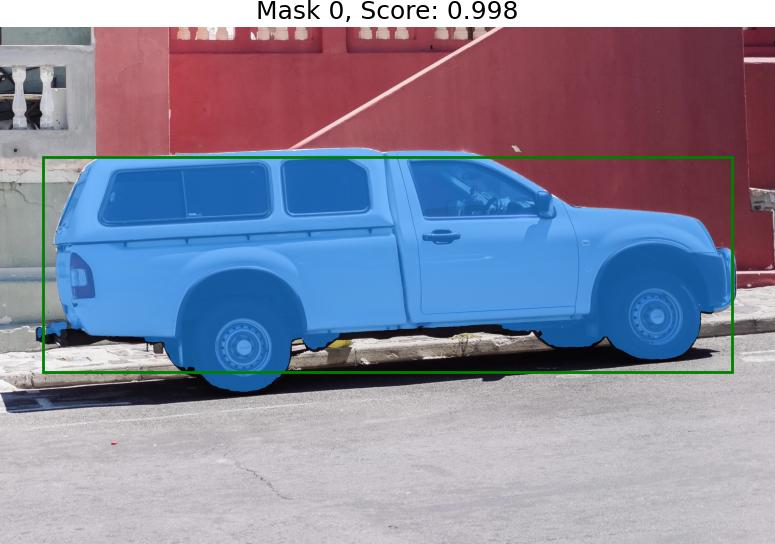
  • Supports model inference with single point and box input, outputting the highest confidence mask or top three confidence masks
  • Supports image testing
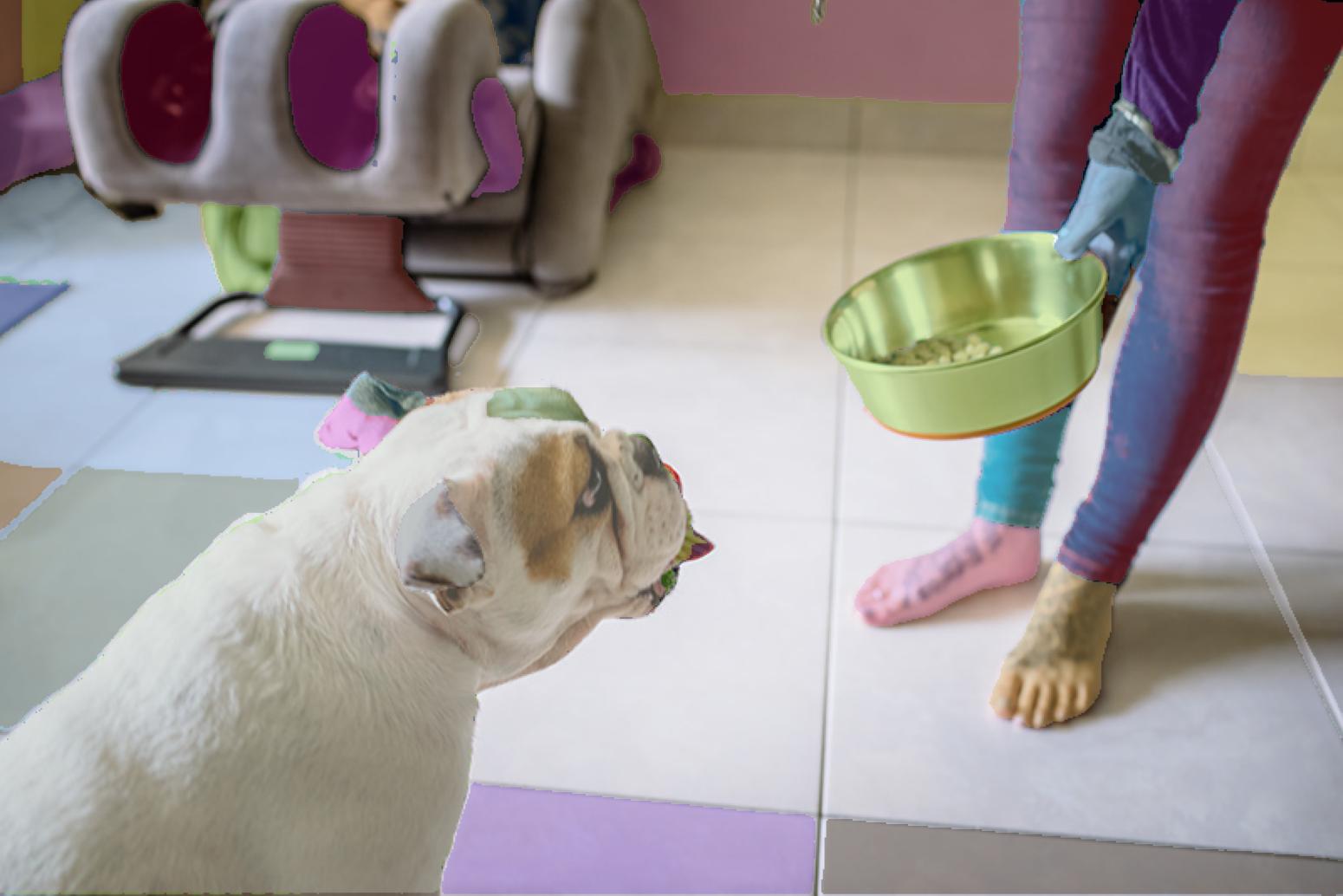
  • Supports automatic image mask generation without point or box input

Note: This example divides image compression (embedding) and image inference (mask_decoder) into two bmodel runs; the last layer resize of the image inference part is not compiled into the bmodel

2. Project Directory

The author made many changes to the demo. It is recommended to directly copy the author's files to the /data directory.

SAM
├─datasets ##Weby and python case image storage
│      dog.jpg
│      groceries.jpg
│      truck.jpg
│
├─docs  ##Help documentation
│  │  boxShare_PC_Wifi.md
│  │  sam.md
│  │
│  └─image  ##Images displayed in documentation
│          eth.png
│          ipv4.png
│          ping.png
│          regedit.png
│          result_0.jpg
│          result_auto.jpg
│          result_box_0.jpg
│          result_box_1.jpg
│          result_box_2.jpg
│          t2.png
│          t3.png
│          terminal.png
│          ui.png
│          uib.png
│          uip.png
│          wlan.png
│
├─models	##Model files
│  └─BM1684X	##1684x model weight files
│      ├─decode_bmodel
│      │      SAM-ViT-B_auto_multi_decoder_fp32_1b.bmodel
│      │      SAM-ViT-B_decoder_multi_mask_fp16_1b.bmodel
│      │      SAM-ViT-B_decoder_multi_mask_fp32_1b.bmodel
│      │      SAM-ViT-B_decoder_single_mask_fp16_1b.bmodel
│      │      SAM-ViT-B_decoder_single_mask_fp32_1b.bmodel
│      │
│      └─embedding_bmodel
│              SAM-ViT-B_embedding_fp16_1b.bmodel
│
├─python	##Python scripts
│      amg.py
│      automatic_mask_generator.py
│      backend.py
│      predictor.py
│      sam_encoder.py
│      sam_model.py
│      sam_opencv.py
│      transforms.py
│
└─web_ui	Web example files
    │  index.html
    │
    ├─components
    │      drawBox.png
    │      firstPage.png
    │      frontPage.png
    │      singlePoint.png
    │
    ├─css
    │      styles.css
    │
    ├─images
    │      dog.jpg
    │      groceries.jpg
    │      truck.jpg
    │
    └─scripts
            main.js

2. Running Steps

Check network environment: Because the interactive web page uses a fixed IP, here we use the development board to share the computer's network via ethernet cable. For detailed operations, refer to the Network Connection Documentation

1. Environment Preparation

Configure Python Environment

Modify the .bashrc file to introduce Sophon's Python environment

sudo vim ~/.bashrc

Add the following at the end of the file

export PYTHONPATH=$PYTHONPATH:/opt/sophon/libsophon-current/lib:/opt/sophon/sophon-opencv-latest/opencv-python/

Save and exit with :wq, then reload the terminal

source ~/.bashrc

You can check with echo $PYTHONPATH to see if it corresponds to the field.

In addition, the runtime environment also needs the following Python libraries

pip3 install torch
##If torchvision installation is too slow, specify Tsinghua source
pip3 install torchvision -i https://pypi.tuna.tsinghua.edu.cn/simple
pip3 install matplotlib
pip3 install flask flask-cors ##Required for running web interactive examples, can be installed optionally

After installation, you can check with pip show package name

2. Python Example Testing

2.1 Parameter Description

The Python example mainly runs the sam_opencv.py file. The parameters are described as follows:

usage: sam_opencv.py [--input_image INPUT_PATH] [--input_point INPOINT_POINT]
                     [--embedding_bmodel EMBEDDING_BMODEL] [--bmodel BMODEL]
                     [--auto bool][--dev_id DEV_ID]

--input_image: Test image path, need to input image path;
--input_point: Input point coordinates, input format is x,y; or input box coordinates, format is x1,y1,x2,y2
--embedding_bmodel: bmodel path for image compression (embedding);
--decode_bmodel: bmodel path for inference (mask_decode);
--dev_id: TPU device id for inference;
--auto: Whether to enable automatic segmentation, bool, default 0 not enabled, 1 enabled;

'''The following are adjustable parameters for automatic masks generator, which can control the density of sampling points and thresholds for removing low-quality or duplicate masks'''
--points_per_side: Number of points sampled along one side of the image. Total points = points_per_side^2. Default value is 32;
--points_per_batch: Number of points the model detects simultaneously. Larger numbers may be faster but use more GPU memory. Default value is 64;
--pred_iou_thresh: Filtering threshold in [0,1], model's predicted mask quality. Default value is 0.88;
--stability_score_thresh: Filtering threshold in [0,1] (stability of mask when cutoff value changes) for binarizing the model's mask predictions. Default value is 0.95;
--stability_score_offset: The amount to offset the cutoff value when calculating stability score. Default value is 1.0;
--box_nms_thresh: Non-maximum suppression box IoU cutoff for filtering duplicate masks. Default value is 0.7;
--crop_nms_thresh: Box IoU cutoff for non-maximum suppression to filter duplicate masks between different objects. Default value is 0.7;
--crop_overlap_ratio: The degree of object overlap. In the first crop layer, crops will overlap this portion of the image length. This overlap is reduced in later layers with more objects. Default value is 512 / 1500;
--crop_n_points_downscale_factor: The number of points sampled per side in layer n is downscaled by "crop_n_points_downscale_factor"^n. Default value is 1;
--min_mask_region_area: If >0, post-processing will be applied to remove masks with area less than "min_mask_region_area" to break connected regions and holes. Requires opencv. Default is 0;
--output_mode: Mask output mode. Can be binary_mask, uncompressed_rle, or coco_rle, coco_rle requires pycocotools. For high resolution, binary_mask may consume a lot of memory. Default is 'binary_mask';

2.2 Test Images

2.2.1 Point Input Testing
cd /data/SAM
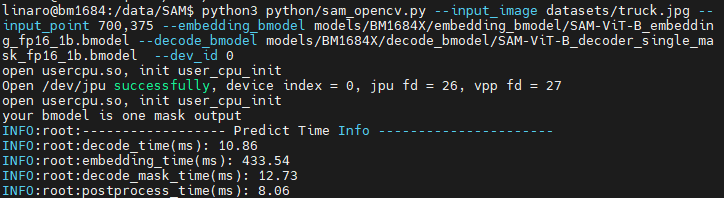
python3 python/sam_opencv.py --input_image datasets/truck.jpg --input_point 700,375 --embedding_bmodel models/BM1684X/embedding_bmodel/SAM-ViT-B_embedding_fp16_1b.bmodel --decode_bmodel models/BM1684X/decode_bmodel/SAM_decoder_single_mask_fp-ViT-B16_1b.bmodel  --dev_id 0

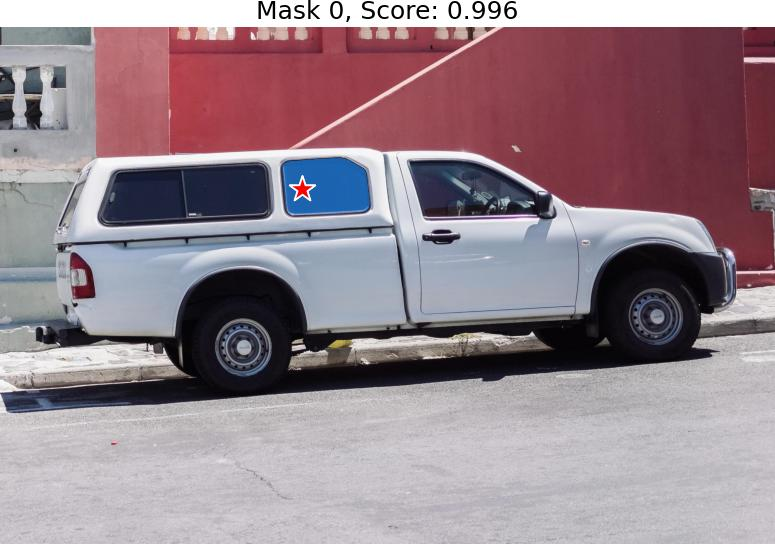
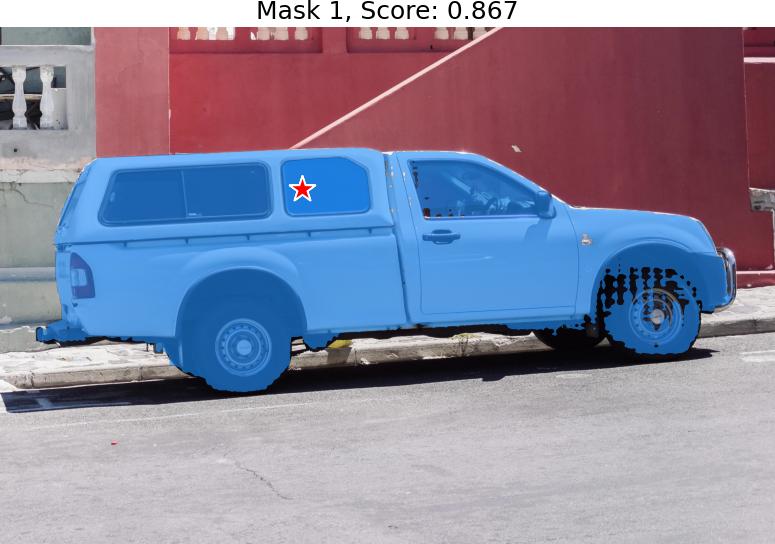
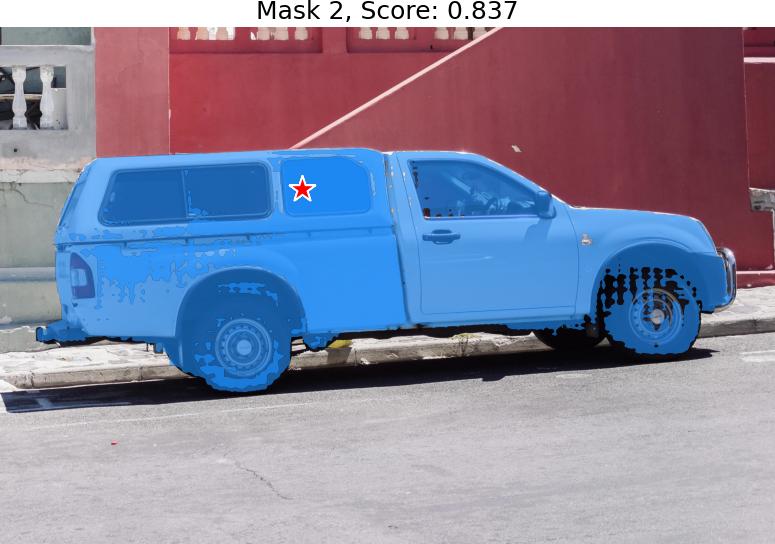
Results are as follows:

Terminal:

terminal

Image: The image is located in results/ under the SAM directory

r0

r1

r2

2.2.2 Box Input
python3 python/sam_opencv.py --input_image datasets/truck.jpg --input_point 100,300,1700,800 --embedding_bmodel models/BM1684X/embedding_bmodel/SAM-ViT-B_embedding_fp16_1b.bmodel --decode_bmodel models/BM1684X/decode_bmodel/SAM-ViT-B_decoder_multi_mask_fp16_1b.bmodel --dev_id 0

The effect and location are similar to point

box_1

2.2.3 Automatic Segmentation

If you want to use automatic mask generation without point and box input, you need to set the input parameter auto to 1, and set --bmodel to the auto bmodel. Operation is as follows:

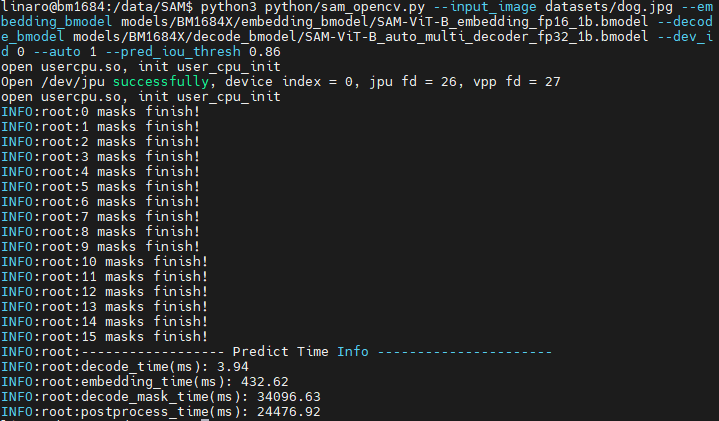
python3 python/sam_opencv.py --input_image datasets/dog.jpg --embedding_bmodel models/BM1684X/embedding_bmodel/SAM-ViT-B_embedding_fp16_1b.bmodel --decode_bmodel models/BM1684X/decode_bmodel/SAM-ViT-B_auto_multi_decoder_fp32_1b.bmodel --dev_id 0 --auto 1 --pred_iou_thresh 0.86

After running, the result image will be saved in results/, and inference time and other information will be printed.

auto

t2

3. Web Example

The interactive image files are stored in the SAM/web_ui/images directory. The program will automatically read all *.jpg images in the directory and display the image names in the dropdown box on the front-end page.

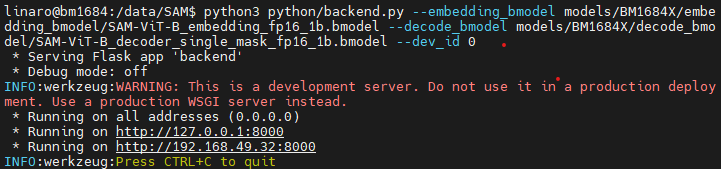
3.1 Start the Backend Program

The backend program is located in SAM/python/, the script is named backend.py. This web_ui Python example does not need to be compiled and can be run directly.

3.1.1 Parameter Description
usage: backend.py [--embedding_bmodel EMBEDDING_BMODEL] [--bmodel BMODEL] [--dev_id DEV_ID]

--embedding_bmodel: bmodel path for image compression (embedding);
--bmodel: bmodel path for inference (mask_decode);
--dev_id: TPU device id for inference;
3.1.2 Running Example
cd /data/SAM
python3 python/backend.py --embedding_bmodel models/BM1684X/embedding_bmodel/SAM-ViT-B_embedding_fp16_1b.bmodel --decode_bmodel models/BM1684X/decode_bmodel/SAM-ViT-B_decoder_single_mask_fp16_1b.bmodel --dev_id 0

If the following content appears, the backend has started

t3

3.2 Start the Frontend Service

The frontend program is in /data/SAM/web_ui. It can be started with Python.

Keep the backend session window open, open a new session window for the frontend

cd /data/SAM/web_ui/
python3 -m http.server 8080

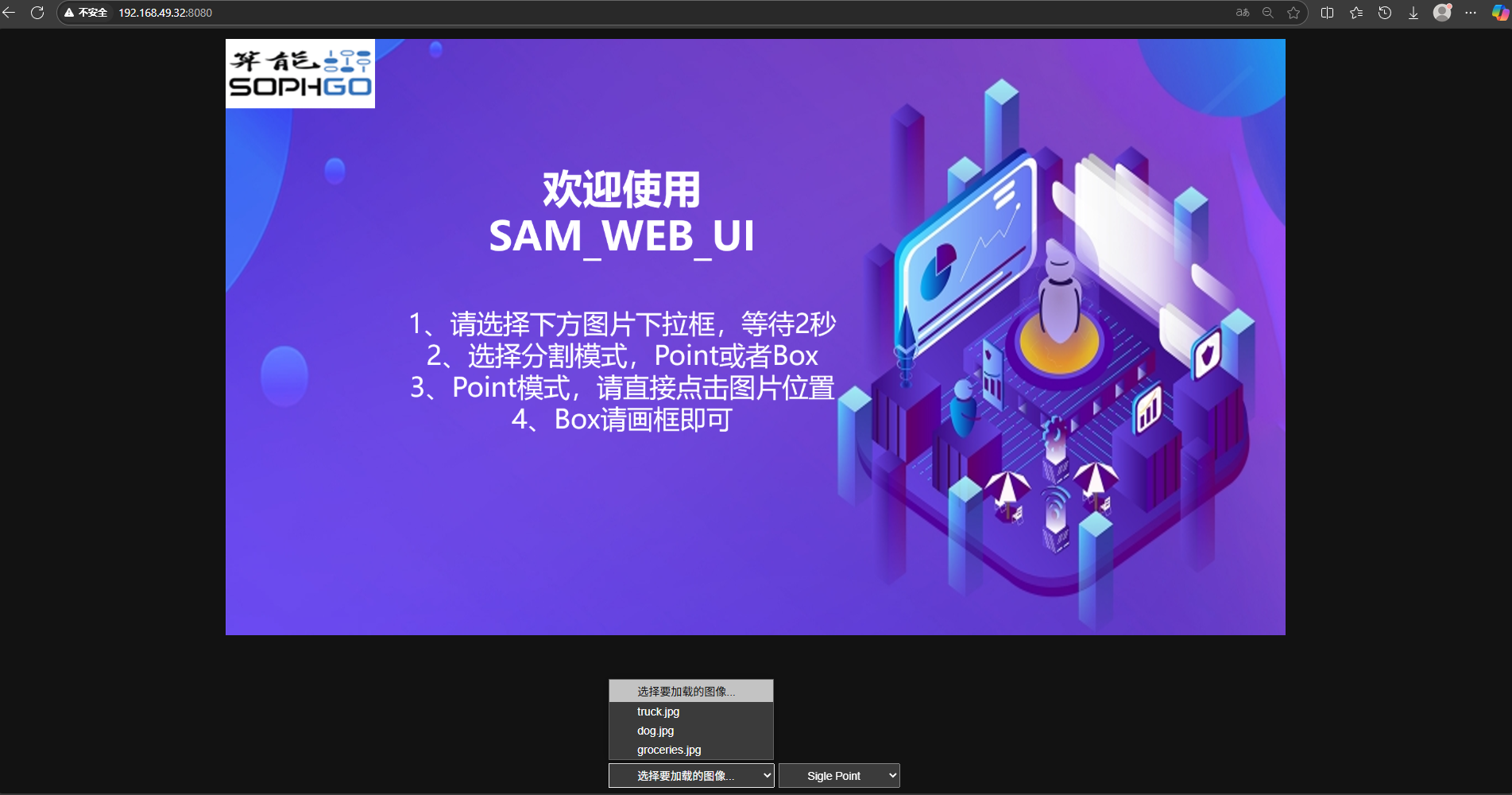
Open the PC browser, enter 192.168.49.32:8080 in the URL to enter the interactive interface. Click the dropdown box of "select image to load..." to select preset images. Select "Single Point" to enter click mode, "Draw BOX" to enter box selection mode

ui

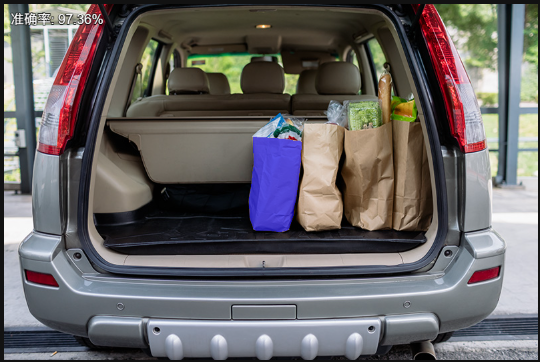
3.2.1 Click Mode

After the image loads successfully, click on the area of interest. Wait 1-2 seconds, the page will draw the mask result.

uip

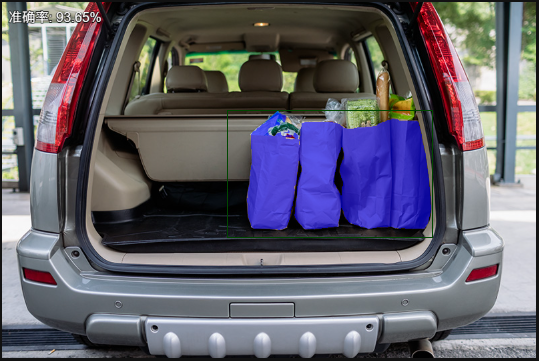
3.2.2 Box Selection Mode

After the image loads successfully, click and drag the mouse to box select the area of interest. Wait 1-2 seconds, the page will draw the mask result.

uib

PS: You can check the running status of backend and frontend in the original terminal. Frontend status can also be checked in the browser developer tools.

Edit this page on GitHub
Last Updated:
Contributors: ZSL
Prev
LPRNet (License Plate Recognition)
Next
YOLOv5 (Object Detection)